
Event Logistics · 10 min read
EES and ETIAS in 2026: What Event Planners Must Know
Europe’s EES biometric border system is live and ETIAS is on the way. Here is what the new checks mean for group arrivals, transfer timing, and why a non-Schengen base changes the maths.

What’s in this guide
Europe changed how it checks people at the border this year, and most delegates still do not know it. If you are bringing an international group into the Schengen area in 2026, two acronyms now sit between your attendees and the arrivals hall: EES and ETIAS. One is already live. The other keeps slipping. Both change how long a coach full of delegates waits at passport control.
This is a field note, not a policy briefing. It is what we tell corporate planners when they call us in the first hour, worried that a new biometric system will strand 200 people at an airport on day one. The short version: the risk is real, it is manageable, and the fix is mostly about timing and expectation-setting rather than paperwork.
We will cover what actually changed, what each system does, how it affects your build and your arrival windows, and one detail that quietly works in your favour if part of your programme runs outside the Schengen zone.
What actually changed at Europe’s borders
For years, a non-EU passport got a paper stamp on entry and exit. A guard glanced at it, worked out roughly how many days you had left, and waved you through. That system is gone.
Since April 2026 the Entry/Exit System, or EES, has been fully operational across the Schengen area. It records every non-EU traveller digitally: name, passport data, a facial image, and fingerprints, logged the first time you cross. Paper stamps are being retired. A second system, ETIAS, was meant to arrive close behind, a pre-travel authorisation you apply for online before you fly. That one has slipped, and we will come to why.
The practical effect for a planner is simple to state and harder to absorb. The first arrival of a group into Europe now takes longer than it did in 2024, and the people in your group have no memory of the old process being any quicker. They will not budget extra minutes unless you tell them to.
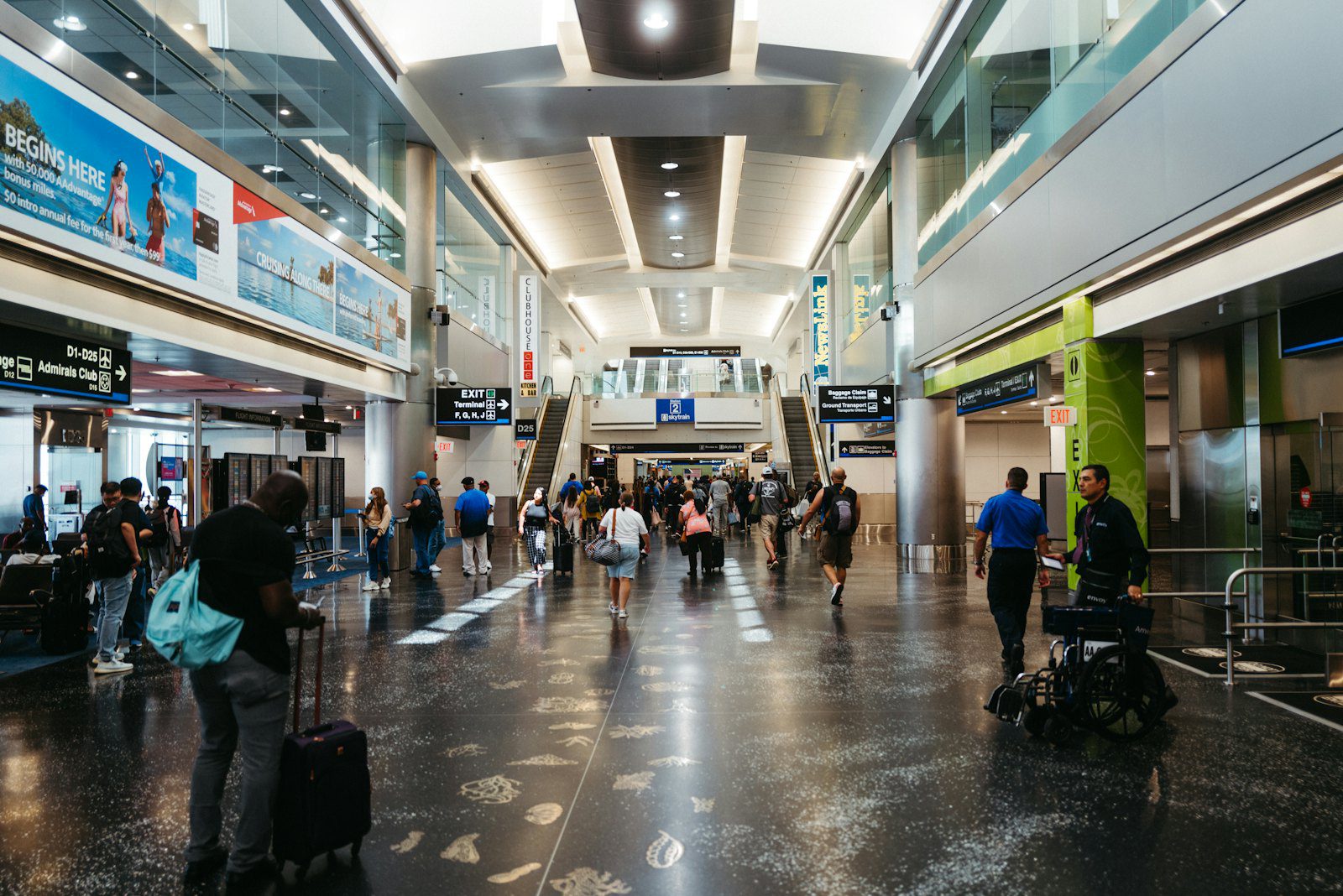
EES: the biometric checks your delegates now face
EES applies to any non-EU national entering the Schengen area for a short stay. That takes in most of your delegates arriving from the United States, the United Kingdom, the Gulf, and anywhere else outside the bloc. On a first crossing, the traveller registers four fingerprints and a facial scan at a kiosk or a booth. The record is then reused on later trips, so the second and third crossings run faster than the first.
The rollout has not been smooth. Since EES went live, several major airports and land crossings have reported long queues while staff and travellers work out the kiosks. Reporting through 2026 has described uneven deployment, technical glitches, and slow processing at peak times. The system will settle. Your event, unfortunately, has a fixed date and will not wait for it to.
Two things matter for groups. First, first-time registration is the slow part, and a conference audience is full of first-timers arriving in the same two-hour window. Second, the kiosks are designed for individuals, not for a coach group moving as one. A party of 180 does not clear a biometric booth at the speed a family of four does.
Worth knowing
The slowest queue of your entire programme is almost always the first arrival wave. Once delegates are registered in EES, their departure and any later crossings move far faster. Schedule your tightest transfers for the back half of the trip, not the front.
ETIAS: the authorisation that keeps slipping
ETIAS is the piece most delegates have heard about, usually in a garbled form. It is a travel authorisation, not a visa. Citizens of visa-exempt countries will apply online before travelling, the system checks them against security databases, and most approvals come back quickly. The fee is 20 euros, confirmed by the European Commission in July 2025. It is valid for three years, or until your passport expires, whichever comes first. Travellers under 18 and over 70 pay nothing but still have to apply.
Here is the part worth pinning down for your 2026 programmes: ETIAS is not live yet. The launch was pencilled in for the last quarter of 2026, then that date came off the official pages. Reporting in mid-2026 points to 2027 as the realistic start, with the system tied to EES bedding in first. As things stand, no one can apply, and no delegate travelling this year needs one.
We flag this because the confusion runs both ways. Some delegates panic that they need an ETIAS immediately and cannot find where to apply. Others will be caught out when it does arrive, because a 20 euro form that takes five minutes is easy to forget until you are at the gate without it. The honest answer for 2026 travel is: not yet, but brief your 2027 groups early.
A travel authorisation that costs 20 euros is trivial money and a genuine trip-ender if a single delegate forgets it. The cost of ETIAS is never the fee. It is the one person who did not apply.
What this means for your build and arrival times
Translate all of this into the only currency a planner cares about: minutes on the ground. Our rule of thumb since EES went live is to add real buffer to the first arrival and to stop treating passport control as a fixed cost.
For a group arriving into a Schengen hub, we now budget an extra 30 to 45 minutes at immigration for the first wave, on top of the usual baggage and transfer time. For a staggered arrival across several flights, that compounds: your last coach may leave the airport well over an hour later than the old timetable assumed. If a welcome dinner is scheduled tight against the last arrival, move it.
The table below is how we brief the timing for a mid-sized group entering a Schengen airport in 2026, set against the pre-EES assumption.
| Stage | Pre-EES assumption | 2026 planning window |
|---|---|---|
| First-wave immigration | 20 to 30 min | 60 to 75 min |
| Coach marshalling after control | 15 min | 25 to 30 min |
| Airport to city-centre hotel | varies by city | unchanged |
| Extra buffer to add, first day | none | 45 to 60 min |
None of this is a reason to avoid Europe. It is a reason to build the first day with slack in it, and to put a meet-and-greet team airside where the airport allows, so delegates are shepherded to the right queue instead of guessing. On our own arrivals we station bilingual staff before passport control to split first-timers from returning travellers, which keeps the group moving as two streams rather than one stalled one.
Ground logistics carry the rest of the load. For the mechanics of moving a large group from the aircraft steps to the venue, our guide to group transport in Albania covers coach sizing, marshalling, and transfer timing, and our transportation team handles the airport side directly.
The non-Schengen angle: why Albania sidesteps the queue
Here is the detail that changes the maths. Albania is not in the Schengen area, and it is not in the EES either. It runs its own border and its own 90-day counter, entirely separate from Schengen’s. Days your delegates spend in Albania do not count against their Schengen allowance, and an Albanian entry stamp is not a Schengen stamp.
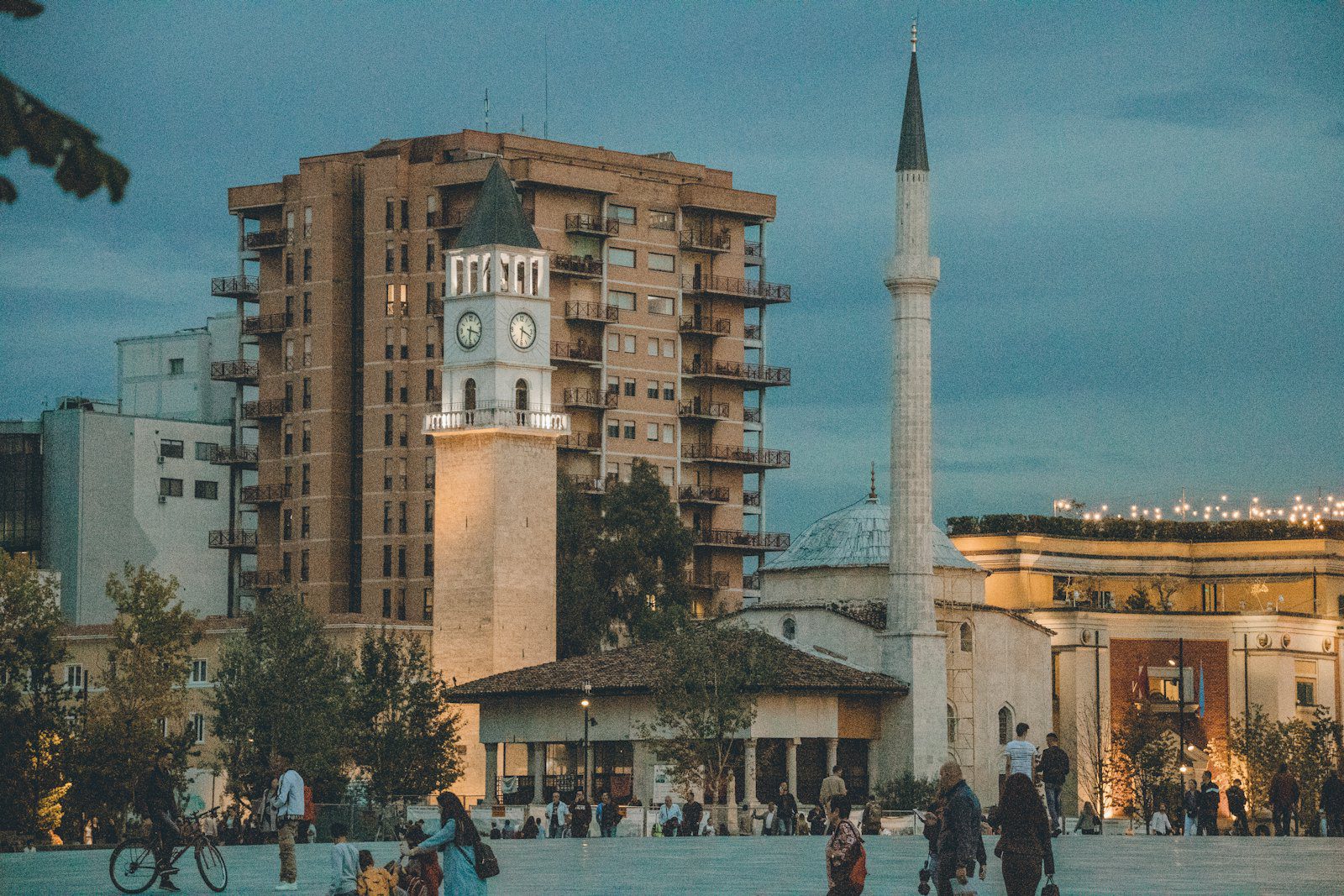
For most Western passports, entry to Albania is visa-free for up to 90 days in any 180-day period. There is no biometric kiosk to register at, no ETIAS to buy, and no facial scan on arrival. A delegate lands at Tirana International Airport, clears a conventional passport check, and is on the coach. For an organiser watching the queues build at Schengen hubs this year, that is not a small thing.
The connectivity holds up too. Rome to Tirana is a little over an hour in the air; Vienna and Munich are both inside two and a half hours; London is under three. Tirana sits 40 minutes from the port of Durrës, under three hours from the Ottoman-era streets of Berat, and within reach of the southern coast at Vlorë and Sarandë for an incentive leg. A four-star hotel in Tirana runs roughly 90 to 120 euros a night in shoulder season, well below the Western European hubs your delegates are used to.
We are not pretending Albania replaces a Frankfurt or an Amsterdam for every brief. But for a conference or an incentive that wants European standards without the 2026 border friction, a non-Schengen base has quietly become an argument in its own right. We have run programmes on exactly this logic, moving delegates who fly into a Schengen hub onward to Tirana, or basing the whole event here from the start. For venue capacities and formats, our conference planning overview sets out the options.
A pre-event checklist for international delegates
Most of the border risk in 2026 is solved before anyone boards a plane. This is the briefing we send delegate coordinators.
- Confirm passport validity early. EES and ETIAS both key off the passport. A passport renewed after an ETIAS registration resets the authorisation, so renewals should happen before, not after.
- Tell first-time EES registrants to expect a kiosk. A single line in the joining instructions saves a hundred confused delegates asking staff at the airport.
- Do not buy an ETIAS yet. It is not live. Warn delegates away from lookalike sites charging fees for a system that is not accepting applications.
- Budget the first arrival wave generously. Add the buffer, then add a little more, and schedule the first evening loosely.
- Check whether any leg is non-Schengen. If part of the programme runs through Albania or another non-Schengen country, the Schengen day count pauses there. That can matter for long or multi-country incentives.
- Keep one contact airside. A single named person who can meet the group before passport control is worth more than any app on the first day.
Handled this way, the new border regime becomes a scheduling detail rather than a crisis. The planners who get caught out are the ones who assumed 2024 timings and briefed no one. The planners who sail through are the ones who added an hour and sent one clear email.
FAQs
Do my delegates need an ETIAS to travel to Europe in 2026?
No. As of 2026 ETIAS is not live and is not accepting applications, and reporting points to a 2027 launch. No delegate travelling this year needs one, and no one should pay a third-party site claiming to sell one now.
What is the difference between EES and ETIAS?
EES is the biometric border system that records fingerprints and a facial image when a non-EU traveller enters the Schengen area, and it is live now. ETIAS is a separate pre-travel authorisation you apply for online before flying; it is not live yet and will cost 20 euros when it launches.
How much longer will passport control take for my group?
For a first arrival into a Schengen hub in 2026 we budget an extra 30 to 45 minutes at immigration for the first wave, because first-time EES registration is the slow part and a conference audience is full of first-timers arriving together.
Does the EES apply in Albania?
No. Albania is not in the Schengen area or the EES. It runs its own border with a separate 90-day visa-free allowance for most Western passports, so there is no biometric kiosk and no ETIAS on arrival.
How much does ETIAS cost and who is exempt?
The fee is 20 euros, confirmed in July 2025. It is valid for three years or until the passport expires. Travellers under 18 and over 70 are exempt from the fee but still have to apply.
Should I avoid European events because of the new border rules?
No. The changes add time to the first arrival, not a barrier. Build slack into day one, brief delegates in advance, and consider a non-Schengen base such as Albania if border friction is a real concern for your group.
Planning a European programme around the new border rules?
We handle arrivals, transfers and delegate briefings for groups landing in Albania and across the region. Tell us the dates and the headcount.
One Response