
MICE Logistics · 11 min read
Group Transport in Albania: A Planner’s Logistics Guide
Flights are the easy part. What decides whether an Albania programme runs smoothly is the ground: the transfers, the coaches, the mountain roads and the timing. Here is how we plan it.

What’s in this guide
This guide is not a brochure. It is the conversation we have with planners in the first hour, once the venue is chosen and someone finally asks the question that quietly decides the whole programme: how do people actually move?
Albania rewards planners who take ground transport seriously. The country recorded more than 12 million foreign entries in 2025, up around 7 percent on the year before and nearly double the 6.4 million of 2019. That growth is wonderful for atmosphere and unforgiving for anyone who books coaches late in July. Roads that felt empty in May fill quickly.
We have run programmes here for fifteen years, several hundred of them, and the pattern holds. Flights are rarely the problem. The ground is. Get the transfers, the vehicle mix and the timings right, and the event feels effortless. Get them wrong, and a delegate’s first ninety minutes in the country are spent on a warm coach going nowhere.
Why ground transport decides the programme
Albania is a small country with one real international gateway, so almost everything radiates from a single point. That is a gift and a trap. A gift, because you can reach the coast, the mountains and three UNESCO towns inside a long day from the same airport. A trap, because every group is funnelling through the same arrivals hall and the same first stretch of motorway.
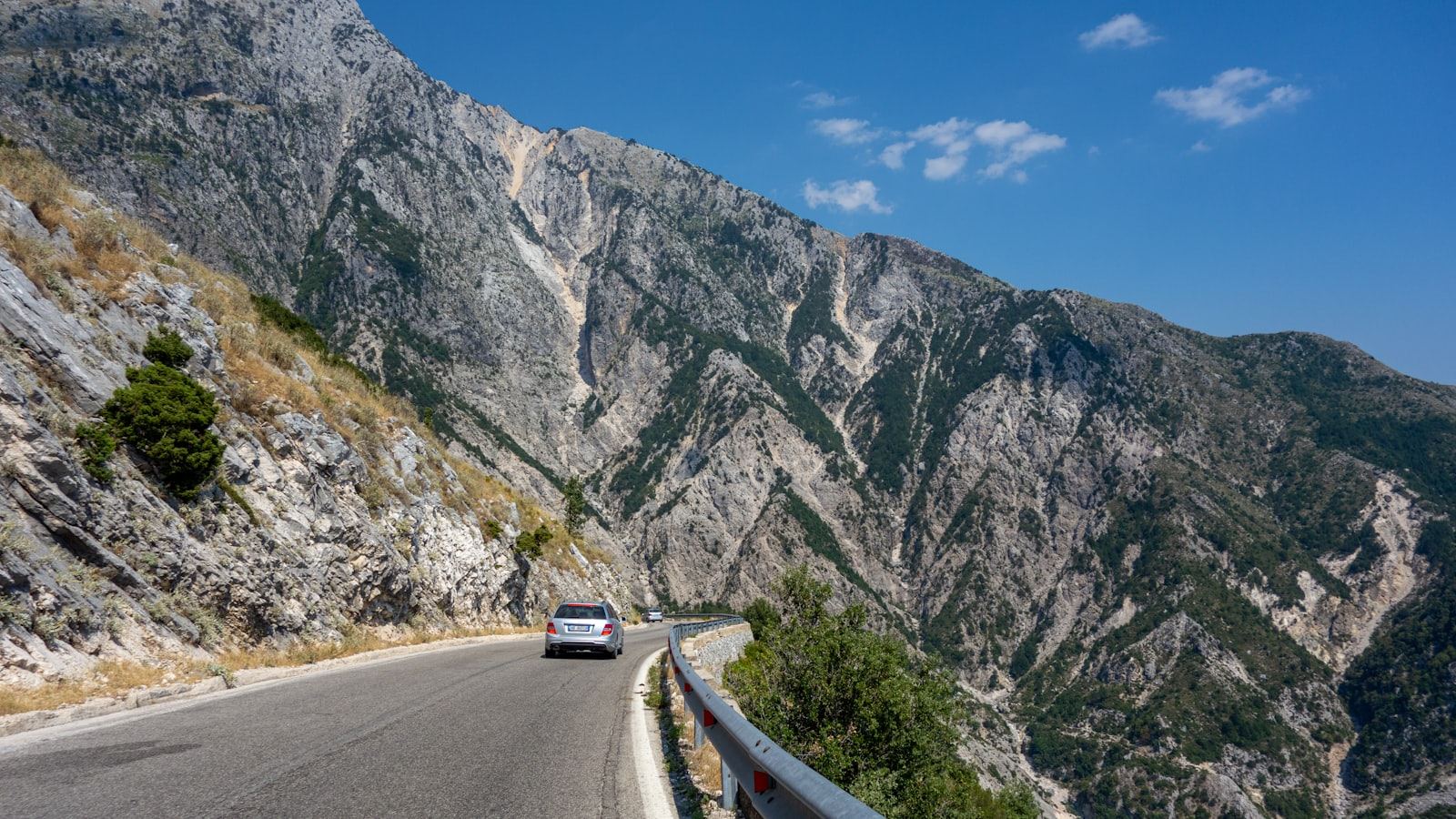
The terrain does the rest. The coast around Durrës is flat and fast. The south, towards Vlorë and Sarandë, climbs into switchbacks that punish a full size coach and a tight schedule at the same time. A planner who treats a transfer to Berat the way they would treat a transfer in the Netherlands will lose an hour they did not budget, and that hour usually lands on the welcome dinner.
So we start every programme from the movement, not the venue. Where do people land, when, in what waves, and how do we get them to the first bed without anyone feeling like cargo. We covered the venue side of this in our corporate retreats field guide; this piece is about everything with wheels under it.
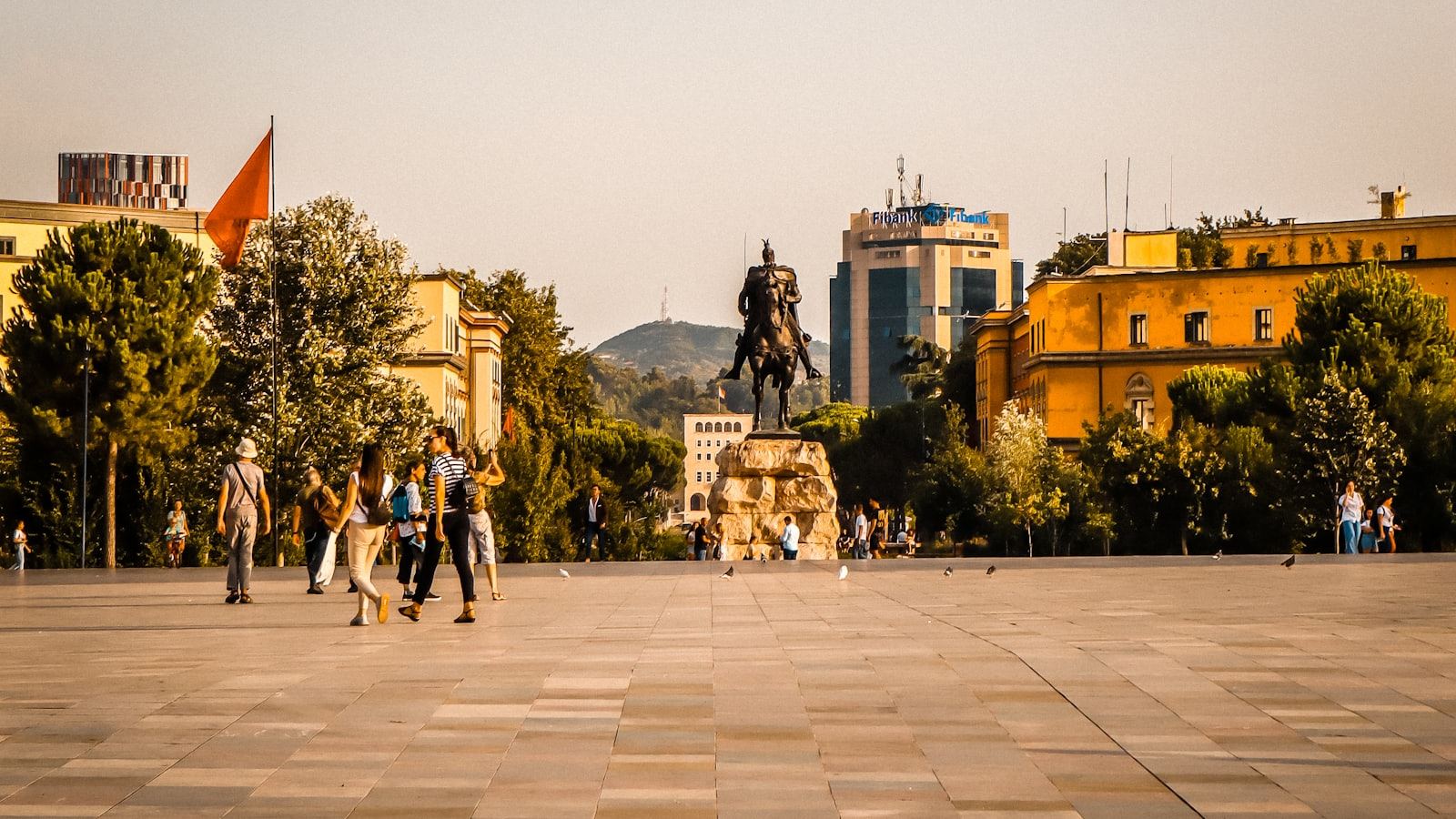
Arrival: Tirana airport and the first transfer
Getting into Albania is easier than most delegates expect. Vienna is about an hour and a half in the air. Munich is under two hours. Frankfurt is a little over two, London around three. Lufthansa, Austrian, Wizz Air, British Airways and Ryanair all run the route, so a mixed European group can usually converge on the same afternoon without anyone routing through a third country.
For group arrivals, plan on Tirana International Airport Nënë Tereza (TIA). There is a second airport at Vlorë in the pipeline, but today the groups still come through Tirana. The airport sits about twenty five minutes north of the city centre, roughly seventeen kilometres, on a clear road.
The arrivals hall is compact, which matters more than it sounds. Two flights landing within twenty minutes of each other can fill it, so we stagger our meet and greet positions and we never rely on a single sign at the door. For a group of any size we build an arrival wave plan: who lands when, which coach they belong to, and how long we hold a vehicle before it rolls without the stragglers. A coach that waits forty minutes for two missing delegates has just delayed two hundred others.
Worth knowing
Build a named “sweeper” into every arrival. One host and one small vehicle whose only job is the late bag, the missed connection, the delegate stuck at passport control. It keeps your main coaches on time and it costs less than the goodwill you lose when a full coach sits idle.
The distances that actually matter
Most transfer mistakes come from reading a map and not a clock. The kilometres are short. The minutes are not always, because road quality changes fast once you leave the Tirana and Durrës corridor. Here is what we actually plan around, measured by car from the airport, before traffic and before the August coast.
| From Tirana airport to | Typical drive | Planning note |
|---|---|---|
| Tirana city centre | About 25 minutes | Clear road, the easy one |
| Durrës (coast) | 30 to 40 minutes | Flat and fast, ideal for big groups |
| Krujë (castle, bazaar) | About 45 minutes | Great half day, narrow at the top |
| Berat (UNESCO town) | Around 2.5 hours | Worth a lunch stop on the way |
| Vlorë (south coast) | About 2.5 hours | Improving roads, still a real journey |
| Shkodër (north) | About 1.5 hours | Easy run towards the lake and Theth |
| Sarandë (far south) | 4 to 5 hours | Plan a midpoint stop, not one push |
The lesson we repeat most often: anything south of Vlorë is a half day of road on its own. We have seen planners try to land a group at lunchtime and seat them for dinner in Sarandë the same evening. It can be done. It rarely should be. A night in Vlorë or Berat on the way down turns a punishing transfer into part of the experience.
Choosing the right vehicle
The instinct is to put everyone on the biggest coach available. It is cheaper per seat and it keeps the group together. For the Durrës corridor that instinct is right. For the south and the mountains it can be exactly wrong.
Here is the fleet we plan around, and when each one earns its place:
- Full coach, 50 to 55 seats: the workhorse for airport runs and the flat coast. Unbeatable on cost per head when the road is good.
- Midi coach, 25 to 30 seats: our default for Berat, the Riviera and anything with switchbacks. It takes corners a full coach cannot and it still feels like a group vehicle.
- Minivan, 7 to 8 seats: VIP splinter groups, the speakers who leave early, the sweeper role.
- Executive sedan: the chairman, the keynote, the client who needs to make a call in private on the way in.
One rule overrides all of it. On any programme above about eighty people, we carry a spare vehicle. We have moved 280 delegates from the airport to a Durrës resort in a single afternoon, six full coaches running in a tight relay, and a seventh sitting on standby that we hoped not to use. The day a coach loses an axle near Lushnjë, and one eventually will, that spare stops being a line item and becomes the reason the gala still starts on time.
The Adriatic option: ferries, and when they make sense
Look at a map and the ferry from Italy is tempting. Bari to Durrës is a real, year round route, run by Adria Ferries and others, and the Port of Durrës sits a short hop from the capital. For the right brief it is wonderful.
For most delegate movement it is not. The crossing runs eight to ten hours, usually overnight, and it lands you at a port, not at a hotel door. We use it in two situations. The first is freight and vehicles: branded cars, exhibition kit, anything heavy that does not need to fly. The second is a deliberate incentive crossing, where the journey itself is the reward and the timing is generous enough to absorb a slow sea day.
If your group is arriving on a Thursday for a Friday conference, fly them. If they are spending a fortnight and a sunrise arrival into Durrës is part of the story, the ferry has its place. The mistake is choosing it to save money and then losing a working day to the Adriatic.
On the ground in Albania, the schedule is only ever as good as its slowest coach.
What transport costs, and what moves the number
Planners always want a figure, so here are the ranges we budget from. Treat them as a starting point, not a quote: season, distance and waiting time move them more than anything else.
- Full coach with driver, full day: roughly €450 to €700, depending on distance and month.
- Midi coach with driver, full day: about €300 to €450.
- Minivan with driver: around €180 to €280 a day.
- Executive sedan, airport transfer one way: €40 to €70.
Three things move that number more than the vehicle itself. Season is the big one: a coach in the second half of July can cost half as much again as the same coach in May, because every operator in the country is fully committed. Waiting time is the quiet one: a driver held at a venue for five hours is a cost whether the wheels turn or not. And distance compounds, because a long transfer often means an overnight for the driver and a positioning leg the next morning.
One practical note that clients are often surprised by. We reclaim VAT on transport on behalf of corporate clients as a matter of course, which takes a real bite out of the headline figure. It is the kind of thing that does not show up on a stock booking site. For the wider movement of incentive groups, our incentive travel work and our dedicated transportation team handle the fleet, the drivers and the permits as one piece.
FAQs
How early should we book group transport in Albania?
For programmes in the second half of July and in August, book eight to twelve weeks out. That is the period when coach supply tightens across the whole country and prices climb. For the May, June, September and October shoulder, four to six weeks is usually comfortable, though VIP vehicles and large coaches still go first.
Can full size coaches reach the south, like Sarandë and Gjirokastër?
Yes, but the roads are mountainous and a full coach is slow on the switchbacks. For anything south of Vlorë we often recommend a midi coach instead, which handles the corners and still keeps the group together. Plan a midpoint stop rather than one long push, and expect four to five hours from the airport to Sarandë.
Is the ferry from Italy practical for delegates?
Rarely for a tight schedule. The Bari to Durrës crossing runs eight to ten hours, usually overnight, and lands at a port rather than a hotel. We use it for vehicles and freight, or for a deliberate incentive crossing where the journey is part of the experience. For a standard conference arrival, flying into Tirana is faster and simpler.
How long is the transfer from the airport to the coast?
Durrës is the quick one at about thirty to forty minutes. Vlorë is roughly two and a half hours on improving roads. Sarandë, on the far south coast, is four to five hours and should be broken with a stop. Tirana city centre itself is about twenty five minutes from the airport.
Do you provide English-speaking drivers and guides?
Yes. Every group vehicle we run comes with a driver briefed on the programme, and we add English-speaking hosts and guides as the itinerary needs them. For multilingual groups we staff accordingly, which is something we plan from the attendee list rather than as an afterthought.
What is the single biggest transport mistake planners make here?
Underbudgeting time and skipping the spare vehicle. The kilometres look short on a map, so transfers get squeezed, and then one delay cascades through the day. A realistic schedule with built in slack, plus a standby vehicle on larger programmes, prevents almost every transport problem we see.
Planning an event in Albania?
We handle the flights, the transfers and everything that moves on the ground. Tell us your dates and your numbers.
One Response