
Industry Trends · 11 min read
Smaller Meetings, Bigger Budgets: The 2026 Shift Explained
Corporate meetings are down to a third of their former size, and spend per head is up 59%. What the 2026 data shows, and how to plan for a 35-person brief with a serious budget.

What’s in this guide
Something odd happened to the ordinary corporate meeting in the first half of 2026. Companies did not stop holding them. They held nearly as many as last year. But the room got a lot smaller, and the budget per chair went up sharply. This piece is about what that shift means when you are the person booking the venue, the flights and the dinner.
We have felt it on our own desk in Tirana. The briefs we receive now are shorter on headcount and longer on expectations. Fewer people, better food, a proper room, a reason to be there. Here is what the numbers say, why we think it is happening, and how to plan for it.
What the 2026 data actually says
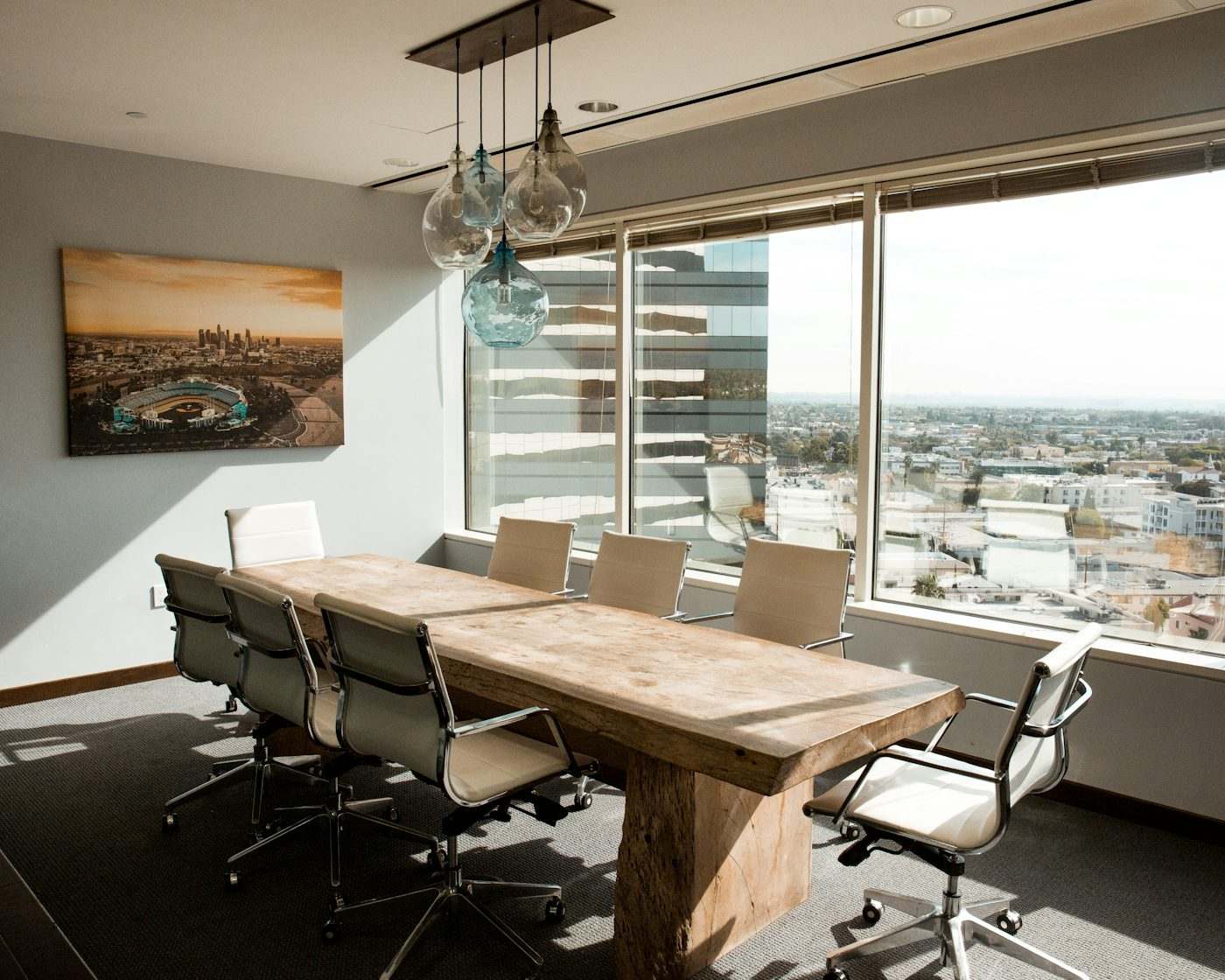
The clearest signal comes from VenueScanner’s half-year review of UK corporate bookings, published in July. Meeting enquiries were down only 2% year on year, which is flat by any sensible reading. The average number of guests per meeting, however, fell from 112 to 38. That is a 67% drop in room size. At the same time, average spend per guest rose 59%.
Read those two figures together and the story is simple. Businesses are not cancelling meetings. They are inviting a third of the people and spending more on each of them.
The same shape shows up in adjacent formats. Team away days saw guest numbers fall 37% while spend per head climbed 55%. Summer parties lost a quarter of their guests and gained 28% per person. Conferences were the exception: volume was down, but the conferences that did happen held their size.
The wider forecasts point the same way. American Express Global Business Travel’s 2026 Meetings and Events Forecast expects cost per attendee to rise around 6% this year, with 90% of European respondents predicting higher overall spend. FCM Travel’s corporate travel research found that meetings and events now absorb more than half of expected travel spend, with employee engagement and training cited as the main driver by 74% of respondents.
None of these datasets is perfect. VenueScanner’s is UK-only and skewed toward venue-hire enquiries. Amex GBT’s is a sentiment survey. But when three independent sources describe the same pattern (fewer seats, more money per seat, engagement as the stated purpose), we treat it as real.
Why meetings are shrinking
Nobody called this at the start of the year. VenueScanner’s own January report predicted smaller conferences, not smaller meetings, and said as much when the data came in. So the honest answer is that several forces landed at once.
Budget scrutiny. Around two thirds of meeting professionals reported flat or reduced budgets going into 2026. When finance asks “who actually needs to be there”, the invite list shrinks first. The saved flights and rooms do not vanish; they get reinvested in the people who remain.
The hybrid hangover. Five years of large all-hands on video taught leadership teams that broadcasting information to 112 people does not need a hotel ballroom. What cannot be done on a call is the working session: 30 people, one problem, two days. That is the format growing.
Engagement as the stated purpose. Once the reason for a meeting becomes “keep our best people” rather than “share the Q3 numbers”, the design logic flips. You want fewer, more senior or more valued attendees, and you want them to feel it was worth their time. That costs more per head by definition.
Travel friction. Visa processing, the new EU Entry/Exit System and rising airfares make each delegate more expensive to move. (We covered the border changes in our EES and ETIAS guide for planners.) When each seat costs more to fill, planners fill fewer of them.
A 38-person meeting with a serious budget is not a cut-down version of a 112-person one. It is a different product, and it needs a different plan.
What a bigger per-head budget actually buys
Here is where it gets practical. A 59% rise in spend per guest sounds dramatic until you see where the money goes. In our experience the money goes on removing the compromises that large groups force on you, rather than on gold leaf.
Take a typical brief we now see: 35 people, two nights, one full working day, one half day, arriving from three or four European cities. The table below shows roughly how the per-head budget shifts when a group moves from “large and efficient” to “small and intentional”, using 2026 Albania rates for a shoulder-season programme in Tirana.
| Line item | Large group approach (100+) | Small group approach (35), EUR per head |
|---|---|---|
| Accommodation, 2 nights | 4★ conference hotel, run-of-house, €85 to €110 a night | 220 to 320 (5★ or boutique, suite upgrades for leads) |
| Meeting space | Ballroom section, theatre style | 40 to 70 (private villa or restaurant room, boardroom or cabaret) |
| Food and drink, 2 days | Buffet lunches, one plated dinner | 140 to 200 (chef-led dinners, tasting menu, wine pairing) |
| Ground transport | Multiple 50-seat coaches, fixed schedule | 35 to 60 (one executive coach or minivans, flexible timing) |
| Activity or excursion | Often dropped for logistics reasons | 60 to 120 (day trip to Berat or Krujë, private guide, lunch) |
| Indicative total per head | Roughly €350 to €450 | 495 to 770 |
Two things stand out. First, the total lands almost exactly where the data says it should: roughly 50% to 70% higher per person than the large-group version. Second, almost every extra euro buys something a delegate will actually notice. Better bed, better plate, a room where everyone can see each other, and a day out that would be a logistical headache for 100 people but is easy for 35.
Worth knowing
The small group is where VAT recovery matters most. Albanian VAT on hotel accommodation is charged at a reduced 6% rate, while most other event services carry 20%. On a €25,000 programme that difference is real money, and we routinely handle the reclaim paperwork on behalf of the client.
Designing the smaller meeting
The mistake we see most often is planners running a small meeting with a large-meeting template. Registration desk, plenary room, breakout rooms, a coach at 08:30 sharp. For 35 people that is theatre. Here is what tends to work instead.
One room, one table
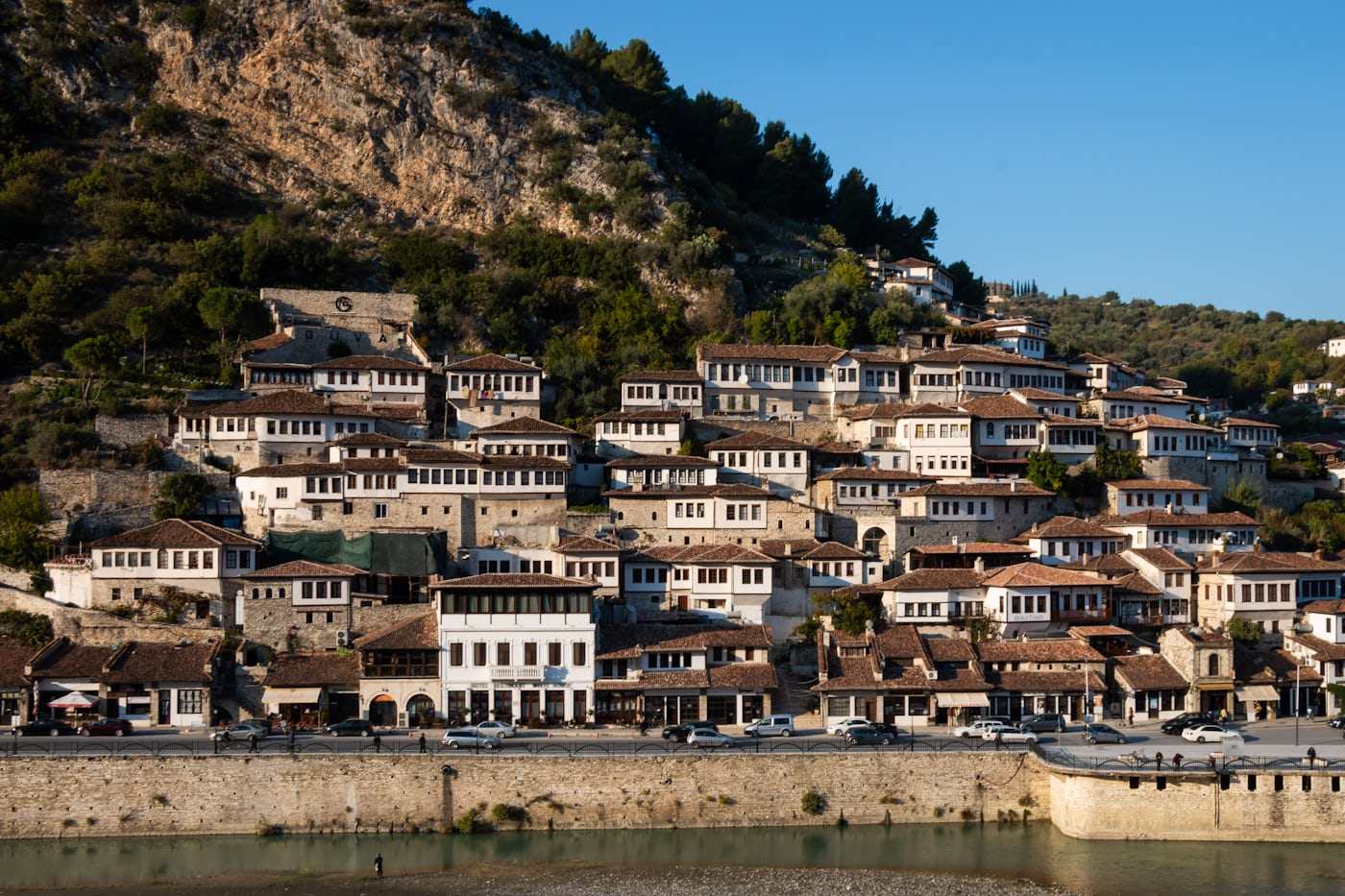
Below about 40 people you can seat everyone at a single boardroom or horseshoe. Do it. It changes the conversation more than any facilitator can. It also opens up venues a large group could never use: a restored Ottoman house in Berat, a winery in the Myzeqe plain, the upper floor of a Tirana restaurant with its own terrace.
Fewer sessions, longer sessions
Large meetings chop the day into 45-minute slots because attention drifts in a crowd. A small senior group can work for two and a half hours on one problem if the room and the coffee are right. Plan half the number of sessions you would for a conference, and leave real gaps between them.
Spend the difference on food and evenings
This is where the extra per-head budget shows most. A plated three-course dinner in Tirana runs €35 to €55 a head at a good restaurant; a chef’s tasting menu with Albanian wines is €70 to €95. For 35 people the second option is affordable. For 120 it is not, and it is barely possible to serve. (Our gala dinner field guide goes into supplier detail.)
Build in the excursion
With 35 people you can put everyone on one executive coach and be in Krujë within 45 minutes, or in Berat within two hours. A half-day out of the city is the single most remembered element of programmes we run, and it becomes viable precisely because the group is small.
Do not over-staff it
A 35-person programme does not need a production crew. One programme lead on site, one driver, one local guide for the excursion day. Most of what a big-event team does (crowd flow, signage, AV switching) simply is not required. That is part of where the saving comes from.
Where Albania fits this shift
We would say this, but the data does the work for us. A destination that struggles to host 1,200 people in one hotel is exactly the right size for 35 people who want somewhere new.
Flights. Tirana passed 10 million passengers in 2024 and has kept adding routes since. Ryanair opened a permanent base here in April 2026 with ten new destinations including Milan, Dublin, Birmingham and Turin. Munich to Tirana is 2h 10m direct on Lufthansa; Rome is 1h 20m; London is about 3 hours; Vienna is 1h 40m. For a 35-person group drawn from three or four European offices, everyone can be at the hotel by mid-afternoon on day one.
Venues that suit the format. Tirana has enough 4★ and 5★ inventory for a small group to take the best rooms rather than run-of-house. Outside the capital, Berat’s Mangalem quarter, the citadel town of Krujë, and the coast at Durrës (35 km, about 45 minutes) all offer meeting rooms and private dining for 20 to 50 people that would be useless for a conference.
Value. The per-head figures in the table above are Albania rates. In Lisbon or Vienna the same “small and intentional” programme would typically come in 30% to 50% higher. That gap is what lets a planner with a €600 per head budget deliver something that feels like €900.
Logistics at this scale. Our standard for a group under 40 is one 50-seat executive coach rather than two minibuses. It costs slightly more per hour but it keeps the group together, and a single driver with a single schedule removes the most common source of delay on excursion days. (The group transport guide has route timings and coach rates.)
The honest downsides. August on the coast is crowded and hot; September and October are far better. Tirana’s rooms sell out around large government or UN events, so hold space early. And English-speaking guides of the calibre a senior group expects are a finite resource; book them with the hotel, not after.
A planner’s checklist for the small, well-funded meeting
If your next brief is 30 to 40 people with a larger per-head budget than you are used to, this is the order we would work in.
- Fix the purpose in one sentence. “Retain and align the top 35” is a different brief from “train 35 new managers”. The first wants a stunning evening; the second wants a good room and short nights.
- Pick the region before the hotel. Small groups can go where big ones cannot. Decide whether this is a city programme (Tirana), a heritage programme (Berat, Gjirokastër) or a coast programme (Durrës, Vlorë) first.
- Take the best rooms, not the block rate. With 35 people you have negotiating power on quality as well as price. Ask for the upper floors and the suites for the leads.
- Design one table. Boardroom, horseshoe or cabaret. Reject theatre style unless there is a genuine keynote.
- Put the excursion in the core agenda. Not as an optional add-on. A shared half day outside the city is what people talk about a year later.
- Spend on the second evening. Arrival dinners are polite; second-night dinners are memorable. Put the tasting menu, the winery or the terrace there.
- Recover the VAT. Ask your DMC about the reclaim process before you sign, not after the invoice arrives.
- Measure something. Budget scrutiny is what created this trend. A two-question pulse survey a month later (“was this worth two days?” and “what did you change?”) is enough to defend the next one.
For planners considering the format for a leadership group, our incentive travel and MICE pages describe the venues and formats we work with most.
FAQs
Are corporate meetings really getting smaller in 2026?
Yes, according to the available data. VenueScanner’s H1 2026 review found the average UK corporate meeting fell from 112 guests to 38, while enquiry volume was flat. Team away days and summer parties showed the same pattern of fewer guests and higher spend per person.
How much more are companies spending per attendee?
VenueScanner recorded a 59% rise in average spend per meeting guest in H1 2026. The Amex GBT 2026 forecast expects cost per attendee to rise around 6% across the industry, with 90% of European planners expecting overall meetings spend to grow.
What is a realistic per-head budget for a 35-person meeting in Albania?
For a two-night, shoulder-season programme in Tirana with a full working day, a private dinner and a half-day excursion, we typically quote €495 to €770 per person for accommodation, meeting space, food, transport and the excursion. Flights and DMC fees are extra.
Which Albanian venues work best for groups of 30 to 40?
Boutique and 5★ hotels in Tirana for city programmes; restored Ottoman houses in Berat and Gjirokastër for heritage programmes; coastal hotels in Durrës and Vlorë for late spring and autumn. All offer single-room meeting space and private dining at this size.
How long does it take to reach Tirana from major European cities?
Munich is 2h 10m direct, Rome about 1h 20m, Vienna about 1h 40m and London around 3 hours. Ryanair’s Tirana base, opened in April 2026, added ten routes including Milan, Dublin, Birmingham and Turin.
Can we recover VAT on an Albanian corporate meeting?
Often, yes. Hotel accommodation in Albania is taxed at a reduced 6% VAT rate and most other event services at 20%. A DMC can handle the reclaim process on behalf of an eligible foreign company, and it is worth confirming eligibility before contracting.
Planning a 30 to 40 person programme?
Send us the brief and the budget per head. We will come back with venues, rates and a draft agenda within 48 hours.