
Industry · 12 min read
Destination Risk in 2026: Why Planners Are Relocating
Twenty two per cent of corporate buyers moved a meeting to a different market this year. The decision is rarely about danger. It is about insurance, visas, air capacity and whether anyone will actually get on the plane.
What’s in this guide
Twenty two per cent of corporate buyers moved a meeting to a different market in the first quarter of this year. That number comes from the Global Business Travel Association, which polled more than 500 travel managers, suppliers and intermediaries in April 2026.
It is a bigger number than it looks. Relocating an event is the most expensive response available when a destination stops feeling comfortable. Cancelling costs you the deposits. Going virtual costs you the room block. Moving costs you everything, twice, with the clock running.
So when roughly one in five buyers chooses the expensive option, something structural is happening. This is what that something is, how destination risk is actually being scored inside procurement teams in 2026, and what to do in the eight weeks after somebody senior says “can we look at somewhere else”.
What the 2026 numbers actually say
Seventy nine per cent of respondents named geopolitical instability and conflict as a top travel risk. It now sits above cost as the leading concern globally, which has not been true for most of the last decade. Seventy six per cent said geopolitical conflict was having a moderate or significant effect on their organisation’s travel and meetings decisions.
Fifty six per cent said their meetings strategy had changed in the previous three months. Inside that group the responses split roughly four ways: 26 per cent shifted something to a virtual format, 24 per cent cancelled outright, 24 per cent reduced the number of employees attending, and 22 per cent relocated to a different market.
Read those four together and a pattern shows up. Three are ways of spending less. One is a way of spending more to keep the event alive. The buyers choosing relocation have decided the meeting itself is not negotiable.
Worth knowing
Relocation and cancellation are not opposite ends of a scale. They are answers to different questions. Cancellation answers “is this meeting worth the money”. Relocation answers “is this city worth the risk”. A planner who confuses the two ends up defending the wrong thing in the wrong meeting.
How destination risk actually gets scored
Very few companies have a formal destination risk methodology. What they have is an insurer, a security provider, a legal team and a travel policy, and those four produce a de facto score without anyone writing it down. It comes from five inputs, weighted very unevenly.
| Input | Who owns it | Weight in the decision |
|---|---|---|
| Travel insurance and policy exclusions | Risk / finance | Very high |
| Government travel advisories | Legal / HR | High |
| Visa and border processing for the full group | Mobility / HR | High |
| Air capacity and route redundancy | Travel management | Medium, usually underweighted |
| Perception among attendees | Nobody formally | Decisive in practice |
The first three are documentary. They clear or they do not, and nobody argues with an insurance exclusion. The fourth is where most programmes quietly fail, and we will come back to it.
The fifth is the one nobody puts in the register and everybody responds to. If 15 per cent of a delegate list emails a line manager to say they would rather not fly somewhere, the event is already being relocated. It has just not been minuted yet.
The advisory problem
Government advisories are blunt instruments. They are written for individual leisure travellers and applied wholesale to a 300 delegate programme with a private coach fleet, a closed venue and a 24 hour duty officer. A line that says “exercise increased caution” will stop a board approval even when the operational reality of a managed event bears no resemblance to the risk described.
The practical response is not to argue with the advisory. It is to build a shortlist where nothing on it triggers one.
What actually triggers a move
Across the programmes we have rebuilt on short notice, the trigger has almost never been an event in the destination itself. It has been one of four things happening somewhere else.
- An insurance renewal. A policy renews, an exclusion list is updated, and a city that was fine in November is uninsurable in February. Nothing changed on the ground.
- A regional headline. Something happens 600 kilometres away in a neighbouring country and the whole region gets repriced in the minds of a US or Asian head office. Geography is not a strong suit in most boardrooms.
- A single senior refusal. One executive declines to travel. Two more follow. The event loses the people it was built for.
- A visa timeline. Processing slips from four weeks to nine. With a mixed nationality delegate list, that alone can kill a date.
Notice that three of the four are reversible, and all four are predictable eight to twelve weeks out if somebody is watching. The events that get relocated badly are the ones where nobody was.
The destination did not become dangerous. The paperwork became impossible. Those are different problems and they have different solutions.
Air capacity is the constraint nobody scores
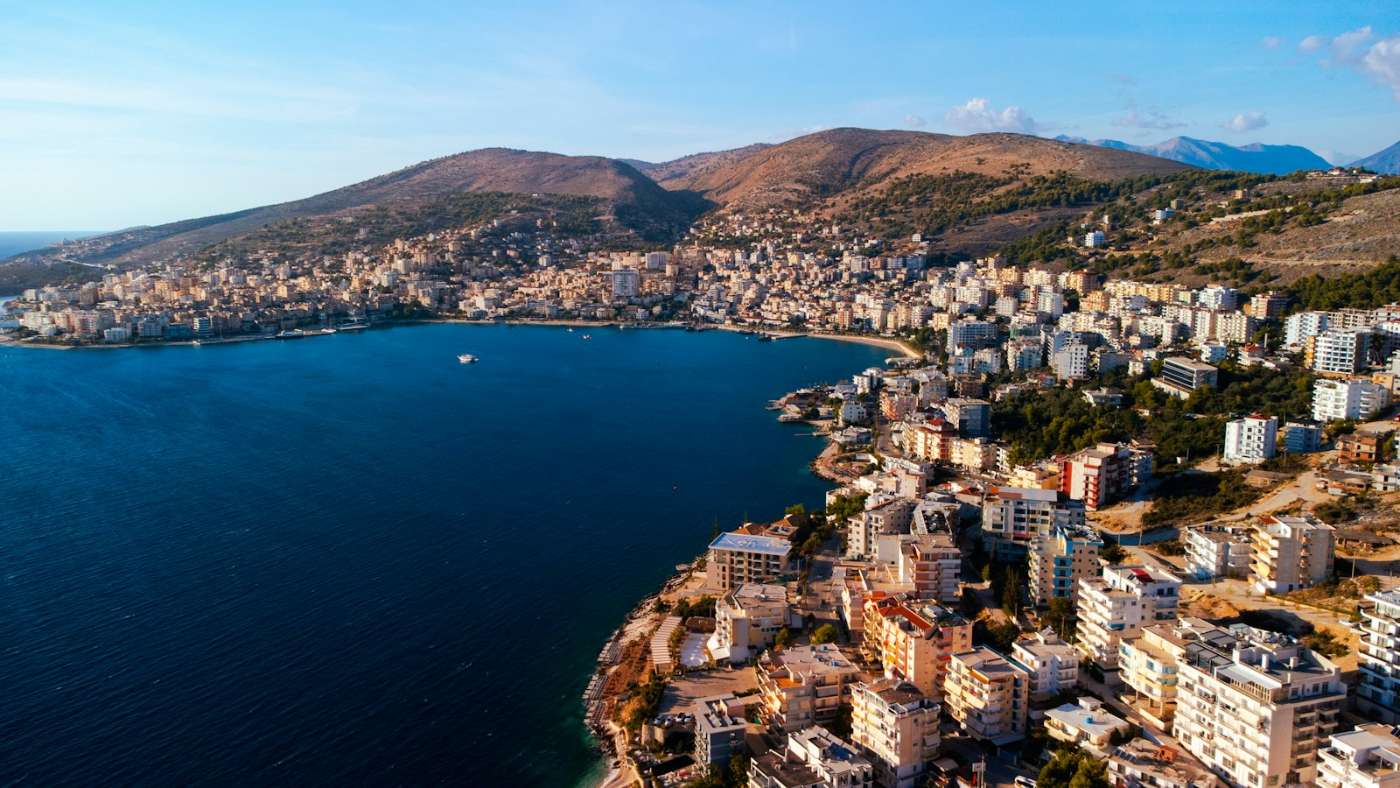
Here is the failure we see most often. A planner relocates to a destination that scores beautifully on safety, cost and venue quality, then discovers in week three that moving 240 people there from six origin cities takes four connections, two overnight layovers and a charter.
Route redundancy matters more than route existence. One daily flight from a delegate’s home city is not connectivity. It is a single point of failure with a 24 hour recovery window. If that flight cancels, your opening plenary is missing a third of the room.
When we assess a replacement destination, air capacity gets scored before anything else, on three questions:
- How many carriers serve the route, and are any of them low cost carriers that will cancel a thin route without much hesitation?
- Is there a second airport within a three hour drive that can absorb a disruption?
- What is the frequency during the actual event window, not the annual average? Shoulder season schedules are not summer schedules.
A destination with three carriers and eight weekly frequencies from your main origin market is operationally safer than one with a single daily flag carrier service, whatever the risk register says about either country.
Where Albania sits in this conversation
We are a Tirana based DMC, so treat the following as interested but specific.
Albania has spent three years becoming a different proposition on connectivity, which is the part of the relocation decision that used to rule it out. Tirana International Airport reported a record 11.6 million passengers in 2025. Ryanair has been the engine: a fourth based aircraft at Tirana for summer 2026, and 43 routes from the airport including 20 new ones this year across Birmingham, Dublin, Milan, Malta, Naples, Pescara, Poznan, Trieste, Turin and Verona. Finnair opened Helsinki to Tirana on 30 April 2026.
Ryanair has publicly committed to six based aircraft, more than 60 routes and over six million passengers a year at Tirana by 2030. Whether every route survives contact with reality is a separate question. The direction is not in doubt.
The practical version for a planner: most Western European origin cities are now a two to three hour direct flight, on more than one carrier, with frequencies that survive a cancellation. That is the threshold at which a destination stops being a charter exercise and becomes a scheduled one, and it is a recent change.
On cost, four star hotels in Tirana sit broadly in the €75 to €110 band per room per night outside the July and August peak. Venue and catering costs sit well below the Western European equivalent. We published the detailed breakdown in our 2026 budget guide for corporate events in Albania last week.
The geography helps more than people expect. Durrës is 38 kilometres from Tirana, about 45 minutes by coach. Berat is roughly two hours. Sarandë and the southern coast are around four hours by road, or a short domestic hop in season. A relocated programme can put its plenary in Tirana and its offsite dinner on the Adriatic without an internal flight, which is rarely true in the destinations Albania competes against.

The honest caveats, because you will find them anyway. Coastal capacity in August is tight and priced accordingly. Five star inventory in Tirana is limited, so a 400 delegate single property programme needs early commitment or a split. Road quality south of Vlorë is improving but a coach journey there is still a coach journey. And if your risk team applies a blanket Western Balkans category, expect to spend a call explaining that Albania is an EU candidate country, a NATO member since 2009, and not adjacent to the thing they are worried about.
Check the visa position early rather than late. Albania sits outside the Schengen area, which cuts both ways for a mixed nationality group. We wrote about how the EU Entry Exit System and ETIAS affect event planners earlier this year, and the interaction between the two is much cheaper to resolve in week one than in week nine.
A relocation playbook that does not burn the budget
If the decision has been made and you have eight to ten weeks, the order of operations matters more than the destination choice.
Week one: freeze the right things
Before looking at a single new destination, establish what is transferable. Speaker contracts, production, branding and content usually move. Venue deposits, ground handling and F&B usually do not. Get the cancellation ladder for every contract in writing on day one. Its shape determines how much runway you have.
Week two: score air capacity, then everything else
Build the origin city matrix first. Three to five candidate destinations, your top six origin markets, carriers and frequencies in the actual event window. Destinations that fail this test come off the list before anybody looks at a venue photograph, which saves a fortnight of pleasant and pointless site research.
Weeks three and four: verify on the ground, not on a deck
A site inspection is not optional for a relocated event. The timeline is compressed, so there is no recovery window for a surprise. Two days on the ground with a local operator who will tell you what does not work beats a month of correspondence. The visits that go well are the ones where the client brings the person who owns the production, not only the person who owns the budget.
Weeks five to eight: rebuild logistics from the transfer out
Ground transport is where relocated programmes lose their margin. Arrival patterns differ in a new destination, coach fleets are smaller, and the airport to hotel leg that took 20 minutes in the original city may take 50. Model the transfer plan against real flight arrival times before committing to an arrival day schedule. Our transport operation exists mostly because this is the part that breaks.
Then rebuild the communications. Attendees sold one destination and given another will drop out unless the replacement is presented as an upgrade rather than a retreat.
Worth knowing
Do not re-tender the whole programme. A relocation under time pressure is the worst possible moment to introduce three new suppliers. Move the event, keep the production team, replace only what geography forces you to replace.
What to take from this
Destination risk in 2026 is mostly an insurance and paperwork problem wearing the costume of a security problem. The events that get moved are rarely the ones in genuinely dangerous places. They are the ones where a policy exclusion, an advisory line or a visa queue made the original plan undeliverable.
So the defence is administrative and early. Know your insurer’s exclusion list before you shortlist. Check visa processing times for every nationality on the delegate list at the point of destination selection, not at registration. Score air capacity as a risk factor rather than a convenience factor. Keep one credible alternative warm, with real venue availability, from the day the first contract is signed.
Twenty two per cent of buyers moved a meeting this year, and a good number did it well. The difference was almost never the destination they picked. It was how many weeks they had when they started picking. If Albania belongs on that shortlist, our MICE and conference team can usually turn a feasibility view around in a few days.
FAQs
How many corporate buyers relocated meetings in 2026?
In GBTA research published in 2026, 22 per cent of buyers said their organisation had relocated meetings to different markets in the previous three months. The same survey found 56 per cent had changed their meetings or events strategy in that period, with 26 per cent shifting events to virtual formats, 24 per cent cancelling and 24 per cent reducing employee attendance.
What is the biggest risk factor for business events in 2026?
Geopolitical instability. Seventy nine per cent of respondents to GBTA’s April 2026 survey named it a top travel related risk, placing it above cost. Seventy six per cent said geopolitical conflict was having a moderate or significant effect on their business travel and meetings decisions.
How long does it take to relocate a corporate event?
Eight to ten weeks is a workable minimum for a programme of 150 to 300 delegates, assuming the production team and content transfer with you. Below six weeks you are choosing between a compromised destination and a compromised delegate experience. The binding constraints are venue availability, visa processing times and air capacity in the event window.
Is Albania a realistic alternative destination for corporate events?
For European origin markets, yes. Tirana International Airport reported a record 11.6 million passengers in 2025, and Ryanair now operates 43 routes from the airport with a fourth based aircraft added for summer 2026. Four star hotel rates sit broadly in the €75 to €110 band outside the July and August peak. The main constraints are limited five star inventory in Tirana and tight coastal capacity in August.
What should a destination risk assessment cover for an event?
Five things: insurance policy exclusions, government travel advisories in every origin market, visa and border processing times for all delegate nationalities, air capacity including route redundancy during the actual event dates, and attendee perception. The first three are documentary and will not bend. Air capacity is most often underweighted; perception is most often decisive.
Should you cancel or relocate an event when a destination becomes difficult?
They answer different questions. Cancellation fits when the meeting’s business case no longer justifies the spend. Relocation fits when the meeting is necessary but the city is not deliverable. Relocation costs more in the short term because you pay for parts of the original programme twice, so it makes sense only where the event itself is non negotiable.
Related guides
Weighing a move to Albania?
We will give you a straight feasibility view on venues, air capacity and budget, usually within a few days.
One Response